This was another difficult search mainly due to the length of time since the medals were awarded.
This pair, for service during the Boer War, were awarded to 2899 Private J Monaghan who served in the King's Own Yorkshire Light Infantry. Luckily, the Queen's South Africa Medal has the initial J.J.B. which helped considerably.
Through a contact on the British Medal Forum (Bart), I received the following information:
John James Budden Monaghan. Born at Frimley, Surrey. Enlisted at
Gosport, 2 March 1889, aged 15 years 4 months. Discharged on termination
of engagement, 1 March 1902. Next of kin was his grandmother, Eliza
Budden, of Prospect Place, Netherbury, Beaminster, Dorset. He also
earned an India Medal (clasps Punjab Frontier and Tirah), and received a
severe gunshot wound at Enselin, 25 November 1899.
This lead me to work out Monaghan's father's name was Samuel and mother
Christiana. I then located him in NZ from 1906 to 1919 working as a tailor/presser. In none of the records was there evidence that
he was married.
I have since found a distant relative who I'll return the medals to. Thank you very much to Margaret S who dropped the medals at my home this week.
The returned medal tally is now 1383.
Of interest, the QSA has the ghost date numbers that were removed from the dye when the war went past 1900. This is mentioned in the Wikipedia link I provided.
Post update - 16 Nov 13
Bart of the British Medal Forum and Janet, who I'll send the medals to, have both supplied me some additional information about Monaghan.
From Bart: 'I
had a quick look at the census entries too, and it struck me that
Monaghan was rather alone in the world. His mother seems to have died at
his birth, and his father (an Army Sergeant) does not appear to have
played any part in his upbringing. He was educated at the Royal Military
Asylum (afterwards renamed The Duke of York's Royal Military School),
which was originally intended for orphaned children, so perhaps his
father died when he was young too. His next of kin, his grandmother,
died not long after he enlisted.'
From Janet: 'I have just discovered an Eliza Mary Monaghan who must have been a
twin sister. She shares the same reference as John in the British Free
BMD Births record. I think she must have died in infancy, but the only
possible death record is for an Elizabeth Mary Monaghan; Age 0; at
Hartley Wintney, Hampshire, UK. I've just looked on the map and it's
not that far from where they were born.
I've now found the death of a Samuel Monaghan in 1875 in Medway, Kent, UK; Age 32. He is living with his grandmother in the 1881 census.'
15 November 2013
Harold Keith Quinan
I really struggled with this search. It started when I received the WWII medals awarded to NX2788 Harold Keith Quinan from a fellow Army officer Major Wayne S.
Finding Harold's WWII nominal roll entry was the easiest part of this whole search. He was a very early enlistee having a service number of 2788. From the NSW Birth Death's and Marriage records I put together the large Quinn family tree. I could work out Harold's death but no birth. Not unusual but it caused confusion. Based on the names of other family members I contacted a descendant and the name Harold was not familiar to the family. Nothing made sense since the NOK from the nominal roll and the mother's name for Harold's death was the same as for the rest of the family. While sitting and staring at Harold's death registration I noticed it was for the same date as a name I assumed to be his brother's, Kenneth Hillary Quinan. I then focused on Kenneth.
What I then found were two WWI service records which are almost the same. The first is for Kenneth Harold Quinan which gives his parents as Norman and Florence and that he was born in New York on 15 September 1898. This would make him over 18 when he enlisted for WWI. The service record is not complete. The second is for Kenneth Hillary Quinan once again with Norman and Florence as his parents. The record shows that he was also born in New York on 2 January 1900. Even though his parents give permission for him to enlist, late in 1918, they ask that he not be sent over seas until he reached 19.
An examination of the hand written parts that the soldier filled in on the form are identical hand writing. I believe that Kenneth Harold and Kenneth Hillary are the same boy who raised his age on two occasions to enlist. In reality Kenneth Hillary was born in 1902 in NSW.
Now to WWII. There is no record of a Harold Keith until WWII and the records gives his next of kin as Florence and his berth place is Warialda which is the same as Kenneth's from the BDM. I'm convinced they are all one and the same.
Kenneth Hillary's death notice does not mention any children so it is a nephew of Kenneth/Harold who I'll send the medals to.
Several members of the Quinan family also served in WWII
Thanks Wayne for the medals and thanks Raylee for the additional Quinan family information.
The returned medal tally is now 1381.
Very early issue Stars were unnamed. Soldiers were later given the option to return them for official naming. It would appear that Kenneth/Harold chose to have his privately engraved.
A brother of Kenneth/Harold was Squadron Leader G J Quinan who was also an early enlistee for WWII. He was also the CO of 4 Squadron.
Another brother served in the same battalion as Kenneth/Harold, this was NX20143 Claude Brian Quinan. Their father also enlisted as N106405 Norman Frank Quinan. This photo is of Kenneth/Harold and his father Norman (on the left).
Finding Harold's WWII nominal roll entry was the easiest part of this whole search. He was a very early enlistee having a service number of 2788. From the NSW Birth Death's and Marriage records I put together the large Quinn family tree. I could work out Harold's death but no birth. Not unusual but it caused confusion. Based on the names of other family members I contacted a descendant and the name Harold was not familiar to the family. Nothing made sense since the NOK from the nominal roll and the mother's name for Harold's death was the same as for the rest of the family. While sitting and staring at Harold's death registration I noticed it was for the same date as a name I assumed to be his brother's, Kenneth Hillary Quinan. I then focused on Kenneth.
What I then found were two WWI service records which are almost the same. The first is for Kenneth Harold Quinan which gives his parents as Norman and Florence and that he was born in New York on 15 September 1898. This would make him over 18 when he enlisted for WWI. The service record is not complete. The second is for Kenneth Hillary Quinan once again with Norman and Florence as his parents. The record shows that he was also born in New York on 2 January 1900. Even though his parents give permission for him to enlist, late in 1918, they ask that he not be sent over seas until he reached 19.
An examination of the hand written parts that the soldier filled in on the form are identical hand writing. I believe that Kenneth Harold and Kenneth Hillary are the same boy who raised his age on two occasions to enlist. In reality Kenneth Hillary was born in 1902 in NSW.
Now to WWII. There is no record of a Harold Keith until WWII and the records gives his next of kin as Florence and his berth place is Warialda which is the same as Kenneth's from the BDM. I'm convinced they are all one and the same.
Kenneth Hillary's death notice does not mention any children so it is a nephew of Kenneth/Harold who I'll send the medals to.
Several members of the Quinan family also served in WWII
Thanks Wayne for the medals and thanks Raylee for the additional Quinan family information.
The returned medal tally is now 1381.
Very early issue Stars were unnamed. Soldiers were later given the option to return them for official naming. It would appear that Kenneth/Harold chose to have his privately engraved.
A brother of Kenneth/Harold was Squadron Leader G J Quinan who was also an early enlistee for WWII. He was also the CO of 4 Squadron.
Another brother served in the same battalion as Kenneth/Harold, this was NX20143 Claude Brian Quinan. Their father also enlisted as N106405 Norman Frank Quinan. This photo is of Kenneth/Harold and his father Norman (on the left).
11 November 2013
Henry Herrick Edwards
I often mention how a little bit of luck goes a long way in solving some cases.
Last Wednesday I received an email from the National Secretary of the RSL asking if I could assist a chap who had some medals he wanted to return to the family. I called the number provided and spoke to Drew who had found the medals awarded to VX80894 Brigadier Henry Herrick Edwards. It didn't take me long to work out that Brigadier Edwards had been awarded the Companion of the Most Excellent Order of the British Empire. I also found that Brigadier Edwards had severed in WWI in the field artillery. This is the bio entry for Edwards.
By using the NSW Birth, Deaths and Marriage records I was able to establish when Edwards died and that his wife's name was Marjorie Inez Edwards (nee Flynn). From their death notices I found that they had three children, Anthony, Meryl and Fay. Anthony was easy to follow but that lead ended when I found that he died in 2011.
For the next few hours I searched in vein for any lead on Meryl and Fay. The electoral rolls gave to many retunes and without a middle name or married name it was just to difficult. I then had that one piece of luck that I needed. In frustration I looked at every page of the electoral roll hits I got. The very last entry on the very last page of the very last published year of electoral rolls (1980) was for Meryl Inez Edwards. This was to much of a coincidence. From there I checked the White Pages and sure enough there was an M I Edwards at the same address from the 1980 entry. I put all this information aside until yesterday when Drew dropped the medals off at my house. Shortly after I rang the number from the White Pages and sure enough I had the right family. I now know that the medals were stolen a couple of years ago. Also with Edwards' medals were two others named to W Flynn. These medals are from Marjorie's side of the family. The last item which I thought would be of interest is a letter to Edwards from General Blamey congratulating him on being awarded the CBE.
Many thanks to Drew for going to significant effort to ensuring that the medals were returned to Brigadier Edwards' family.
The returned medal tally is now 1375.
Update - 30 Nov 13
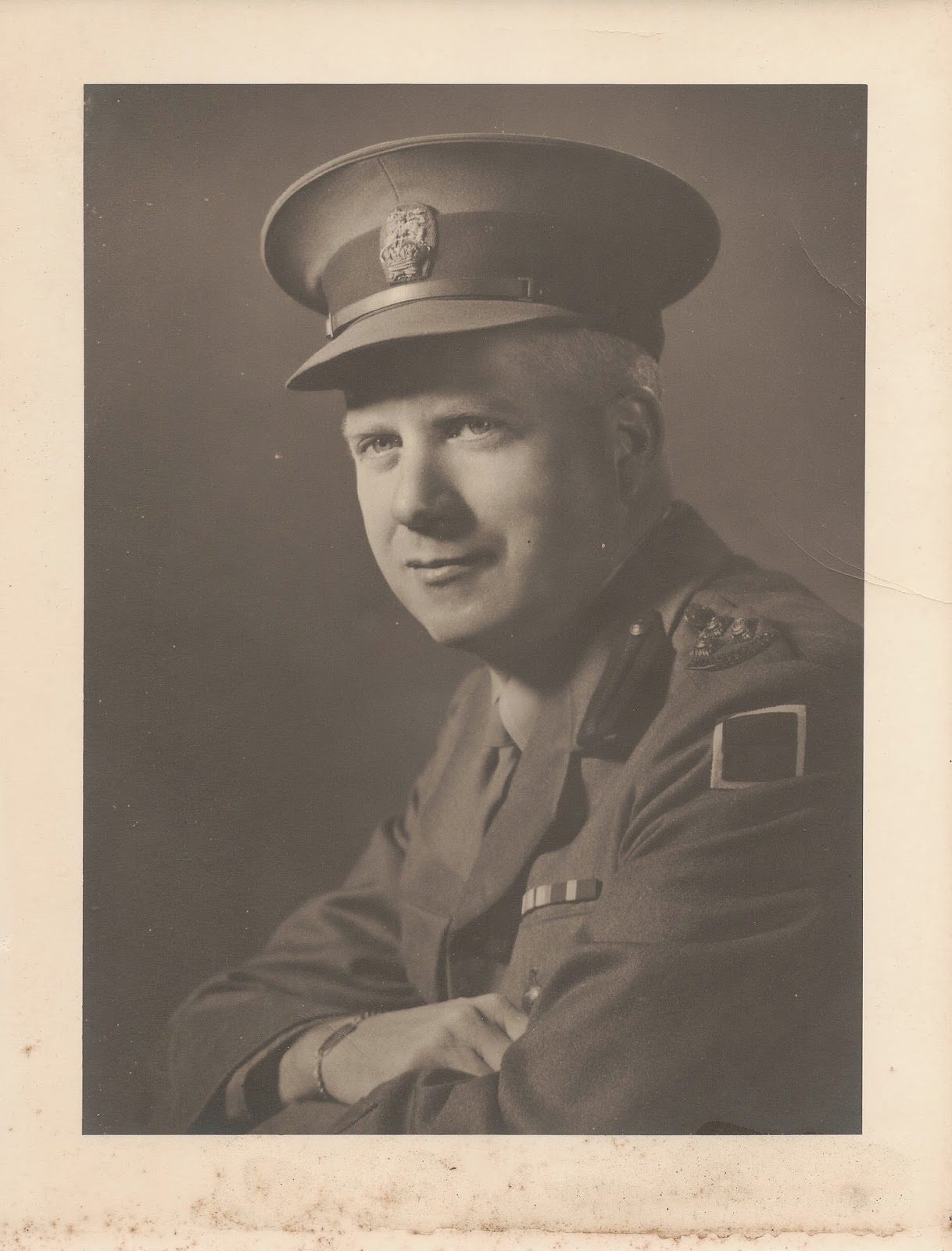
I recently spent a wonderful hour with BRIG Edward's daughter Meryl when she visited me to collect the medal. While she was here, Meryl showed me a portrait of Edwards and she kindly allowed me to scan it and post it here.
Last Wednesday I received an email from the National Secretary of the RSL asking if I could assist a chap who had some medals he wanted to return to the family. I called the number provided and spoke to Drew who had found the medals awarded to VX80894 Brigadier Henry Herrick Edwards. It didn't take me long to work out that Brigadier Edwards had been awarded the Companion of the Most Excellent Order of the British Empire. I also found that Brigadier Edwards had severed in WWI in the field artillery. This is the bio entry for Edwards.
By using the NSW Birth, Deaths and Marriage records I was able to establish when Edwards died and that his wife's name was Marjorie Inez Edwards (nee Flynn). From their death notices I found that they had three children, Anthony, Meryl and Fay. Anthony was easy to follow but that lead ended when I found that he died in 2011.
For the next few hours I searched in vein for any lead on Meryl and Fay. The electoral rolls gave to many retunes and without a middle name or married name it was just to difficult. I then had that one piece of luck that I needed. In frustration I looked at every page of the electoral roll hits I got. The very last entry on the very last page of the very last published year of electoral rolls (1980) was for Meryl Inez Edwards. This was to much of a coincidence. From there I checked the White Pages and sure enough there was an M I Edwards at the same address from the 1980 entry. I put all this information aside until yesterday when Drew dropped the medals off at my house. Shortly after I rang the number from the White Pages and sure enough I had the right family. I now know that the medals were stolen a couple of years ago. Also with Edwards' medals were two others named to W Flynn. These medals are from Marjorie's side of the family. The last item which I thought would be of interest is a letter to Edwards from General Blamey congratulating him on being awarded the CBE.
Many thanks to Drew for going to significant effort to ensuring that the medals were returned to Brigadier Edwards' family.
The returned medal tally is now 1375.
Update - 30 Nov 13
I recently spent a wonderful hour with BRIG Edward's daughter Meryl when she visited me to collect the medal. While she was here, Meryl showed me a portrait of Edwards and she kindly allowed me to scan it and post it here.
09 November 2013
A broken group brought back together
This is a pretty complicated story and a testament to Bill’s
patience. The end result is that four medals were actually lost to the veteran’s
son but Bill’s advice bought a broken group back together. To top it off, Bill
was able to arrange for the issue of three other medals that had not been
awarded. The following is Bill journey through this search. The returned medal
tally is now 1356.
We’ve lost Dad’s medals, well some of them, can you help us
find them?
This is a question that I get asked almost monthly, and try
as I might, people never seem satisfied, as I know I wouldn’t to be told, that
they are asking an almost impossibility.
Had David not been a family friend and an ex-serviceman,
with an understanding of where we were going and how difficult the journey
would be, I do not think that I would have even begun to think that together,
we could do anything. Nor be as successful as we have been.
The first part was simple: what medals did David and his
mother have?
- 1939-1945 Star, but not engraved
- Pacific Star
- 1939-45 War Medal, and
- 1939-1945 Australian Service Medal
The next question: did David or his family, have any of his
father’s discharge papers?
Fortunately, David’s father had been very careful to keep
all his documents.
It was from these that we learned he was eligible for:
- 1939-1945
Star
Pacific Star - War Medal 1939-45
- Australian Service Medal 1939-45
- Australian Active Service Medal 1945-75 Clasp Vietnam
- Vietnam Medal
- Defence Force Service Medal with 1/2and 3rd Clasp
- National Medal with 1st Clasp
- Australian Defence Medal
- Meritorious Service Medal
- Long Service and Good Conduct Medal
- Vietnamese Campaign Medal, as well as the,
- Emblem of the US Meritorious Unit Commendation,
- Emblem of the Republic of Vietnam Gallantry Cross Unit Citation with Palm
So where were they?
The first question was: did his father ever get the medals
in the first place? On Dave’s behalf, but with his details and signature on the
form, I submitted an application for the posthumous issue of any medals his
father had failed to claim.
After quite some time an excited David contacted me to tell
me that he had just received his father’s:
- AASM 1945-75, with Clasp Vietnam,
- Defence Force Service Medal with 1/2and 3rd Clasp, and the
- Australian Defence Medal
So that now reduced the total missing to five.
Now came the part that I refuse to enter into, and I will
leave it to your own imagination as to why. Having put together a family tree
and related timeline, I wrote a series of questions for Dave to ask individual
members of his family. Over quite some time this research slowly bought to
light the missing:
- National Medal with 1st Clasp
- Meritorious Service Medal
- Long Service and Good Conduct Medal, and the
- Vietnam Medal
However, the following still eluded us both:
- Vietnamese Campaign Medal,
- The Emblem of the US Meritorious Unit Commendation,
- The Emblem of the Republic of Vietnam Gallantry Cross Unit Citation with Palm
To complete the set, Dave followed my advice to purchase a
replica of the missing Vietnamese Campaign Medal, and mount it with the others.
That by doing so there was less chance that the medals would again be split up,
as there was no guarantee that we could ever pull the set back together.
So how did the medals all look, see for yourself.
01 November 2013
Murray MacAlister
For the amount of research that has gone in to this search there isn't a lot to actually tell. I've spent over six hours in total researching this soldier and the end result is one of the most satisfying I can remember.
A couple of weeks ago I received an email from Len B of Dee Why. Len is a Vietnam War veteran and found in his father's effects the medals awarded to NX135958 Murray John MacAlister. Len knew Murray and was able to provide me a few details about him.
Murray is often referred to in official records as John Murray so once I had sorted that out I could follow him quite easily. He joined the Army prior to WWII and was still serving in 1963. His medals show his WWII service and his Long Service and Good Conduct Medal. After WWII Murray moved to the newly formed Australian Regular Army. His regimental number of 2712 shows he was an early member. His Long Service and Good Conduct Medal is hand engraved and has ARA after his name.
While it was easy to follow Murray's life it was very difficult to unravel his family and that is were the effort went. Murray married twice. Firstly in 1942 and then again in 1948. He did not have any children from either marriage. Murray's second wife, Jean, was also on her second marriage. Jean's first husband left her to marry one of her sisters.
It was through Jean's brother that I found a family member. There are several other family complications that don't add to the story so I'll leave it at that. I will add that I've had a wonderful email and phone conversation with Tim who is Murray's great nephew. Thanks to Len who handed me the medals when I met him at the AWM on Monday.
The returned medal tally is now 1352.
A couple of weeks ago I received an email from Len B of Dee Why. Len is a Vietnam War veteran and found in his father's effects the medals awarded to NX135958 Murray John MacAlister. Len knew Murray and was able to provide me a few details about him.
Murray is often referred to in official records as John Murray so once I had sorted that out I could follow him quite easily. He joined the Army prior to WWII and was still serving in 1963. His medals show his WWII service and his Long Service and Good Conduct Medal. After WWII Murray moved to the newly formed Australian Regular Army. His regimental number of 2712 shows he was an early member. His Long Service and Good Conduct Medal is hand engraved and has ARA after his name.
While it was easy to follow Murray's life it was very difficult to unravel his family and that is were the effort went. Murray married twice. Firstly in 1942 and then again in 1948. He did not have any children from either marriage. Murray's second wife, Jean, was also on her second marriage. Jean's first husband left her to marry one of her sisters.
It was through Jean's brother that I found a family member. There are several other family complications that don't add to the story so I'll leave it at that. I will add that I've had a wonderful email and phone conversation with Tim who is Murray's great nephew. Thanks to Len who handed me the medals when I met him at the AWM on Monday.
The returned medal tally is now 1352.
22 October 2013
Egypt Medal awarded in 1885
The sending of a contingent by the NSW colony to Sudan in 1885 is considered as Australia's first military commitment. The need to send troops to Sudan was in response to the death of General Gordon, however, the NSW Infantry Contingent arrived to late to participate in any major action. The contingent was awarded the Egypt Medal with the clasp Suakin 1885 and the Khedive's Star. Considering that the medals were awarded 128 years ago I never thought that one would come my way.
Several weeks ago I received the Sudan 1885 pair awarded to 18 Private Frederick Long. Even though the medal in engraved with NSW infantry, Long was a member of the Ambulance Corps. I was able to confirm Long's service through several sources but there was no information available about him. For close to a week I was stuck so I started putting all sorts of search options in to Trove. One string of word was 'Long Sudan Contingent' and to my surprise I got a hit. I then found the following Return Thanks notice.
The notice thanks the members of the Sudan Contingent for their sympathies of Fred Long. I had my man but not the name of his wife. I then went back through the previous weeks funeral notices and found Long's funeral notice.
Finally I had Long's wife's name - Elizabeth. The other bit of key information was that Long's full name was Joseph Frederick.. Using this information I was able to confirm their marriage and that Fred and Elizabeth didn't have children.
The marriage records provided Elizabeth's maiden name and parents names. Using this new information I found that she had 9 siblings. Several, like her twin sister died as an infant and others didn't marry.
Elizabeth's youngest brother, Charles, married Matilda Hall. From Charles death notice I found his children s names including that of Linda Pavey. I was stuck there for a bit until I workout that Linda was Belinda Ingram. From there, thanks to the electoral rolls it didn't take long to track down the current generation and I have now spoken to Fred's great nephew, Warren, and great niece, Annette. I'll be returning the medals to Annette in the near future.
I showed the medals to a real expert of this particular era and he pointed out the the medal is missing the Suakin clasp and that the Kedhive's Star is not an original. The good news is that the Egypt medal is 100% correct. Thank you very much to Lee and Fiona M who sent the medals to me. The returned medal tally is now 1340.
Several weeks ago I received the Sudan 1885 pair awarded to 18 Private Frederick Long. Even though the medal in engraved with NSW infantry, Long was a member of the Ambulance Corps. I was able to confirm Long's service through several sources but there was no information available about him. For close to a week I was stuck so I started putting all sorts of search options in to Trove. One string of word was 'Long Sudan Contingent' and to my surprise I got a hit. I then found the following Return Thanks notice.
The notice thanks the members of the Sudan Contingent for their sympathies of Fred Long. I had my man but not the name of his wife. I then went back through the previous weeks funeral notices and found Long's funeral notice.
Finally I had Long's wife's name - Elizabeth. The other bit of key information was that Long's full name was Joseph Frederick.. Using this information I was able to confirm their marriage and that Fred and Elizabeth didn't have children.
The marriage records provided Elizabeth's maiden name and parents names. Using this new information I found that she had 9 siblings. Several, like her twin sister died as an infant and others didn't marry.
Elizabeth's youngest brother, Charles, married Matilda Hall. From Charles death notice I found his children s names including that of Linda Pavey. I was stuck there for a bit until I workout that Linda was Belinda Ingram. From there, thanks to the electoral rolls it didn't take long to track down the current generation and I have now spoken to Fred's great nephew, Warren, and great niece, Annette. I'll be returning the medals to Annette in the near future.
I showed the medals to a real expert of this particular era and he pointed out the the medal is missing the Suakin clasp and that the Kedhive's Star is not an original. The good news is that the Egypt medal is 100% correct. Thank you very much to Lee and Fiona M who sent the medals to me. The returned medal tally is now 1340.
20 October 2013
Bradney post update number 2
Norma has very kindly provided me a picture of a cross that was found on Raymond Wildman's body when it was recovered. The picture has been added to the Bradney family story.
13 October 2013
Bradney post update
I have been provided some fantastic additional information about the Bradney family which I've added to the post. There is also a photo of the headstone erected at Reginald Wildman/Bradney's grave after his remains were identified in 2010.
11 October 2013
Medals lost where they are supposed to be.
This is the story of a group of Vietnam War medals that
became lost in the RSL bureaucracy but thanks to Bill research the mystery has been resolved.
The returned medal tally is now 1338. Here is Bill’s story.
Those of you who follow this blog will recall the Robson/Lethlean
story, and the question I started it with: “When is a medal lost?” To that
perhaps should I now add another question. “When is a medal found?”
The story below fits both questions it also falls into that
category that Glyn and I call “Hmm.” That, you will remember is the category of
no names, and no places. An old soldier would no doubt add “and no pack drill”.
In some ways this is another Albert RN.
It started with the request to ANZAC House by the
Memorabilia Officer of an RSL to help return several medals that had been left
at reception. A request that came after some considerable time of looking for
the recipient but with no luck.
And at this point the story ends, because I can’t really
write it. Why?
Well after even more time and several Interstate as well as
Intrastate, phone calls. I found myself talking to the wife of the medal
recipient. A surprised wife at that. And why?
Well in 2007 just before her husband passed away, he asked
her that on his passing to give his medals, to his local RSL Sub-Branch, and
this she did.
Unfortunately, it appears that the paperwork associated with
the gift was never completed.
Recently (ANZAC Day) his daughter borrowed the medals from
the RSL Sub-Branch for her son to take to school for show and tell.
After which they returned them to the reception at the RSL
Sub-Branch. Then they were lost within the RSL.
The Bradney family
This post is about the medals of the three Bradney brothers who served during WWI. The story also gets more interesting with a nephew being one of the soldiers identified in 2010 as being buried in the mass grave at Fromelles.
The story starts with the arrive of 7 WWI medals in my mail box.
From there a remarkable family history has emerged. I am very grateful to Norma S who is the great niece of the Bradney brothers and has provided me a wealth of information and family photos. The Bradney's are directly descended from convicts but that part of the family history is one that I hope Norma can tell in full one day. So now to the Bradney brothers.
John Bradney first served the colony of NSW in the Boer War as a member of the NSW Imperial Bushman. At aged 42 John enlisted in the AIF and was allocated to the 56th Battalion, AIF. John was declared killed in action on 9 Oct 17 and is commemorated at Villers-Bretonneux Cemetery.
Wentworth Edward Bradney was 32 when he enlisted in to 54th Battalion AIF. He was killed in action on 24 September 1917. Wentworth is commemorated at Menin Gate.
Donald Walter Bradney was 26 when he enlisted in to 30th Battalion, AIF. Donald survived the war and died in 1955.
Another member of the Bradney family also served. This was Reginald Raymond Wildman, the nephew of the Bradney brothers. Reg was a Bradney and initially allocate to 1st Battalion but later transferred to 54th Battalion. Reg took part in the Battle of Fromelles and reported mission in action before being declared KIA on 19 July 1916. Reg's remains were not found. That would all change after the discover of a mass grave in 2006 based on the research of Lambis Englezos. Following extensive research and DNA testing many of the bodies in the grave have been identified. This included the remains of Reg. Norma provided the DNA sample. My friends Tim Lycett and Sandra Playle have also played a big part in the research of these soldiers and recently published a book about it called Fromelles: the Final Chapters.
Photo added 13 Oct 13
My sincere thanks go to Renn M who sent me the medals and to Norma for all the information and pictures that she has allowed me to reproduce. The returned medal tally is now 1334.
Post update 13 Oct 13
I am very grateful to Norma who has provided me a 1891 newspaper article about the Bradney family and biographical details of the soldiers in this story.
Photo added 20 Oct 13 This cross was found on the body of Reginald Raymond Wildman.
Wagga Wagga Advertiser Thursday 6 August 1891
A Day at "Sunnyside."
(BY "SINBAD.")
MIDWAY between Wagga and Upper Tarcutta, and about three miles north-west of the Borarabola Homestead, may be seen Mr. John Bradney's most appropriately named property "Sunnyside." The commodious residence standing on a mild elevation slightly to the West, and in sight of the
road, catches old 'Sol's earliest beam. A young and spacious orchard already productive, gives healthy promise of fruitful results. Mr. Bradney, who is a most genial host, possesses it addition to other numerous comforts a good earnest helpmate and nine children-five boys
and four daughters (one of the latter being married). He originally lived at Gunderoo, journeying thence to the plains, he subsequently anchored at " Sunnyside," where he has resided for eight years. He owes his success purely to his enterprise, and thrift two qualifications which combine in perfect harmony with energy, and a sound, practical knowledge of all the affairs appertaining to the skilful management of a farm. Mr. B. is regarded as an authority. He knows the difference between a horse and a cow, and when he harnesses his ploughing team the collar and, bames go on together. His property embraces an area of 1400 acres, 188 of which is cultivated under cereals, oats and wheat the
yield of the latter last year amounting to 800 bushels about, the grain, being- rather pinched in consequence of rust which is the chief opponent to the success of all farmers. Mr. B. considers that there is no officious preventative of this trouble, but by sowing early, about April, the danger is greatly minimised. The hay crop of last season was about 150 tons, the wheat is disposed of locally, but the hay is dispatched to the metropolis, where there is ever a fair demand for good wholesome stuff; Mr.B. finds, on the whole, that it is more remunerative to pay the additional expenses incurred in transit to Sydney than to sell it at Wagga, where the consumption at present is inadequate to
insure an expeditious and payable sale. In the yard I noticed two large waggons burdened with about 6 and a 1/2 tons each ready to start for Wagga, to be sent thence to Messrs. Heaton Bros., Sydney. Farming on a cramped scale never pays, and with the lapse of the past decade hard labor has been so entirely superseded by the operation of mechanical implements that the hand reaper, mower, binder, etc. is becoming a personage of little utility-a "wasty product." Mr. Bradney's farm is replete with every mechanical aid, and he assures me that he would strongly advise every farmer to avail himself of the advantages of machinery as there undoubtedly are enormous dividends to be derived from
them in the shape of labor saved and time saved. "Time is money," and therefore time saved is money saves. " Q.E D." To begin with, Mr. B. has three double furrow ploughs (two Hudson Bros, and one Lennon), £26 each one six-furrow paring plough (Hudson Bros.) 20 pound 10s. With the
latter six horses are used and a fair day's effort turns over six acres. Before ploughing, the land is thoroughly cleared of weeds or other growths by the admittance of sheep, then the seed is sown, and the ploughing commences, much time being saved, and another important advantage as well is obtained by this mode of procedure. The grain, being deeper, germinates and becomes very strongly established in root 'ere it arrives at the surface, and then the attacks of the birds, usually so fatal, become of little moment, the stalks become strong and sturdy however assaulted by the winged assailants, so much for the ploughs. Mr. B. uses steel, oval tined zig-zag harrows, which be finds
more penetrating and durable. With the 16ft. harrow four horses are worked, and three with the 12ft harrow. The sowing is performed by a Martin's seed sower, capable of sowing fully 12 acres an hour. Mr.B. uses two reaper and binders, one is an Osborne the other a McCormack, the latter is simpler and being a later and more improved machine does better work. The cost of these landed was £70 each. A Robinson stripper and winnower has been obtained from Melbourne at a cost of £92 10s and
does its part here. I next came to the engine (a six horse Marshall) which drives a Buncles travelling chaff-cutter. This engine is built especially for the work assigned it and for use in the colonies. The fire box is sufficiently large to admit a log 3ft. 6in. And the exhaust steam delivers into the tub and is re-delivered into the boiler which helps to maintain the heat, and consequently less fuel is requited to
maintain the required pressure (about 60lbs.) It was obtained from Messrs. McLean Bros., and Rigg, through Lorimer and Co., Wagga, and gave Mr. Bradney every satisfaction, as did likewise Messrs. Edmondson and Co., through whom the Chaff-cutter was obtained. Bradney speaks in glowing terms of his agents, who, he says, performed his business with the greatest of fairness and expediency. The chaff-cutter (£260), one of Buncos best, is fitted with every necessary contrivance and works splendidly, all the tailings are redelivered into the feed box, all waste being thus obivate. It is capable of cutting 2/12 tons per hour, and the length of the chaff can be regulated to a nicety. The bagger keeps two men actively employed, one adjusting the bags, the other sewing them up, with care a hundredweight can be got into a bag, but the average is about 85 or 90 lbs. Mr. Bradney speaks in high terms of the capacity of the machine and when I asked him where it was made he slyly remarked "in Melbourne they don't make them in 'Freetrade' Sydney, it doesn't pay,"-Mr. Bradney is a Protectionist, as most farmers and producers are. While Mr. B. and his aids were engaged in getting the machine into motion, Mr. Charles Archer had a most miraculous escape
from death. He had mounted the boiler to adjust the belt, and in order to get it on to the wheel, he turned the latter. Immediately the engine started (it appears the valve was slightly open), and poor Archer was soon in among the governors, piston-rode eccentric, and fly wheel. I stood within three feet of him almost paralysed. I could do nothing. The engine driver (Master J. Bradney),
immediately ran up and stopped the engine, but the weight of the large wheel maintained the motion for a time, and when at length we lifted Archer from his perilous position he was as white as a sheet, and bruised badly, his body also showing abrasion but he was alive, and therein lies the wonder had he moved his feet out of the horizontal, or relaxed his hold for a moment, he was lost. I hope to hear of his speedy recovery from the severe shock and bruising.
Gently the mandoline,
Our tenure of life is uncertain,
For truly we never know when
Like a streak in the west we may vanish,
And fade from the vision of men.
Mr. Bradney owns 1200 breeding sheep and about: 50 head of cattle, in addition to numerous horses and other livestock. His yield of wheat varies from 25 to 40 bushels per acre, according to the peculiarities of the season or prevalence of rust, etc. Hares are unpleasantly numerous, doing considerable damage to the crop. When I visit Sunnyside again I shall take my " iron" and a full belt of cartridges. The education of Mr Bradney's little ones is entrusted to Mr. T. F. Mason, and they are in most efficient hands.
The story starts with the arrive of 7 WWI medals in my mail box.
From there a remarkable family history has emerged. I am very grateful to Norma S who is the great niece of the Bradney brothers and has provided me a wealth of information and family photos. The Bradney's are directly descended from convicts but that part of the family history is one that I hope Norma can tell in full one day. So now to the Bradney brothers.
John Bradney first served the colony of NSW in the Boer War as a member of the NSW Imperial Bushman. At aged 42 John enlisted in the AIF and was allocated to the 56th Battalion, AIF. John was declared killed in action on 9 Oct 17 and is commemorated at Villers-Bretonneux Cemetery.
Donald Walter Bradney was 26 when he enlisted in to 30th Battalion, AIF. Donald survived the war and died in 1955.
Another member of the Bradney family also served. This was Reginald Raymond Wildman, the nephew of the Bradney brothers. Reg was a Bradney and initially allocate to 1st Battalion but later transferred to 54th Battalion. Reg took part in the Battle of Fromelles and reported mission in action before being declared KIA on 19 July 1916. Reg's remains were not found. That would all change after the discover of a mass grave in 2006 based on the research of Lambis Englezos. Following extensive research and DNA testing many of the bodies in the grave have been identified. This included the remains of Reg. Norma provided the DNA sample. My friends Tim Lycett and Sandra Playle have also played a big part in the research of these soldiers and recently published a book about it called Fromelles: the Final Chapters.
Photo added 13 Oct 13
My sincere thanks go to Renn M who sent me the medals and to Norma for all the information and pictures that she has allowed me to reproduce. The returned medal tally is now 1334.
Post update 13 Oct 13
I am very grateful to Norma who has provided me a 1891 newspaper article about the Bradney family and biographical details of the soldiers in this story.
Photo added 20 Oct 13 This cross was found on the body of Reginald Raymond Wildman.
2376
Private John Bradney
56th Battalion AIF
Born June, 1874 at Gundaroo, NSW
Died 2-4-1917 at Louverval Village, France
His name appears on the Memorial Panel 161,
26 Villers Bretonneux, France.
Son of John and Catherine Bradney of
Gundaroo, NSW. The family later moved to Wagga Wagga NSW.
John Bradney Jnr. was born at Gundaroo NSW
and was privately tutored at home. According to his sister, Emily, "he
understood all kinds of machinery and farming". He went to the Boer War as
a Riverina Scout Recruit with the Hon. Rupert Carington Force shortly before
the end of that conflict. In 1907 he received a Soldier Settlement Grant, No. 1907.33
to purchase 'Gobbagombalin', Farm No. 150 in the Parish of Cottee near Wagga
Wagga. He subsequently enlisted for WW1, at Wagga Wagga NSW on 9th April, 1916
and was killed in France
during the campaign which pushed the German troops back to the Hindenburg Line
(known as the Siegfried Line). John's brother Wentworth was killed at Glengorse
Wood in Northern France whilst serving with
the 54th Battalion and his brother Donald was severely wounded in 1918. His
nephew, for whom he was guardian, Reginald Raymond Bradney/Wildman was also
killed in France, at
Fromelles, with the 54th Battalion on 20th July, 1916 and was identified and
re-interred in the new Fromelles
Cemetery in 2010.
1620 Wentworth Edward Bradney
54th Bn AIF
Born 1883 KIA 24 Sep 17 memorialised at Menin Gate, panel 158.
Son of John and
Catherine Bradney. Wentworth was the twin brother of Mabel Ademia Bradney. He
enlisted at Wagga Wagga on 22-11-1915 and joined the Kangaroo March
to Sydney, 315 miles away. He was taken into the
'B' Company of the AIF at Goulburn, embarked on the 'Ceramic' at Sydney with
the 2/55th Battalion and was transferred to the
54th Battalion, the same Battalion as his nephew Reginald Raymond
Bradney/Wildman,
who had enlisted on
31-12-1914 and who saw action at Gallipoli. They both served in Nth. Africa and
then in France
where they both died. His brother John also served in France with the
56th Battalion and was killed at Villers Bretonneux but his brother
Donald
Walter Bradney of the 14th Howitzer Unit survived and returned to Australia as an
invalid
846 Gunner/Driver Bradney, Donald Walter
Born 1888 Wagga Wagga, NSW - Died 1955
Gosford, NSW
Son of John And Catherine Bradney.
On 22nd July, 1915 Donald Bradney enlisted
as Gunner/Driver
in the Australian Howitzer Battery of the 14th Field Artillery Brigade. He was 26
years and 8 mths old when he enlisted at Liverpool
and was described as being 5'3", weighing 168 lbs
with a chest measurement of 38", with
fair complexion, blue eyes and fair hair. At that time he was a farm labourer
working on the family farm. After training in England
and Egypt he left for France on 26th March, 1917 and was gassed, on
8th August, 1918, in France
and returned to England.
On 9th December, 1918 he was returned to Australia aboard the 'Argyllshire'
with a wasted left leg.
Of three sons and one grandson of John and
Catherine Bradney he was the only one to return to Wagga Wagga where he was
still living in 1943. His last known address was Stewart Street, Killcare, NSW in 1954
where he lived with his long-time partner Ellen.
1888 Private Reginald Raymond
Wildman
54th Battalion 2nd A.I.F
Born 14th April,1896 at Keiraville (Kiama)
NSW
KIA Battle
of Fleurbaix, Fromelles, 20th July, 1916
Son of Auriol Agnes Bradney
Reginald's early years were spent with his
mother's relatives, the Wildman family of Kiama district and he took their
name. Later he was living with his Guardian and Uncle John Bradney at the
family farm, Hevington, near Coolamon, NSW. When he joined the Army Cadets he
was advised to enlist under the name he was known by i.e. Wildman. Therefore
when he attested for the Rein 2nd Battalion on 30th December, 1914 he did so as
Reginald Raymond Wildman and was enlisted as Private No. 1888 in the 2nd
Battalion AIF on 2nd January, 1915 and took part in the Gallipoli landing on
25th April, 1915. He was transferred to the 54th Battalion on 14th February,
1916 and was sent to Egypt,
about May, 1916, according to his mother's information. Reg signed his
enlistment paper as 'R. Wildman' and his attestation paper as 'Regenal Ramon
Wildman'. He named his uncle John Bradney as his next-of-kin. John Bradney
enlisted on 9th April, 1916 and was also killed in action in France in 1917.
Reg's death was registered as Reginald Raymond Wildman. He was killed in action
near Pozieres, in what the British called the Battle of Fleurbaix, on the
morning of 20th July, 1916. His name is amongst those on the Memorial at VC
Corner Australian Cemetery Memorial, Fromelles, Nord Grave/Panel No. 11. In
2010 He was re-interred, with others from the original mass grave, in the new Fromelles Military Cemetery
- Plot 3, Row A, Grave 4, having been formally identified when his DNA was
matched to that of his niece, Norma Staber, daughter of his sister Alice Rock,
nee Jones.
There appears to have been contact between
Reg. and his birth mother, Auriol Agnes Bradney, over the years as part of his
schooling was done at Kittigra
Public School, near
Coolamon. He lived for some time at Coolamon and was working there at the time
of his enlistment. He wrote to her whilst on active service and she received
the notification when he was killed in action. Reg's uncle, Wentworth Edward
Bradney (b.1883), transferred from the 55th Battalion to the 54th Battalion on
16th June, 1916 and appears to have been in North Africa when Reg. was lost,
but he himself was killed in Glengorse Wood in Northern France or Belgium.
Three of the sons of John and Catherine
Bradney of Wagga Wagga and one grandson enlisted with the Army and only one
son, Donald Walter Bradney, returned home, gassed and lamed but he did return.
John Bradney Snr. died on 1st February, 1916 at the age of 71. His wife
Catherine had died in 1908, aged 56 years.
A portrait in oils, of Reginald was still
in the possession of Auriol's daughter, Alice Rock (nee Jones) at the time of
her death and was bequeathed to her daughter, Norma Staber. His Anzac Medallion
was passed on to Norma by her cousin Alan Hayes' widow, Dot Hayes, in 2001 when
she learnt of Norma's interest in his history.
The Bradney Family of Wagga Wagga
John Bradney
was born in 1844 at Jamberoo NSW, the first of ten children of John Bradney and
Ademia Henry. John Bradney Snr. also had eleven children with Anna Louise
(Anne) Pugh Nicholls, whom he married six years after the death of Ademia. He
and Anne already had nine children before their marriage with their tenth child
being born the day after that event. Their eleventh child was born in the
following year.
Catherine Bradney (nee Brownlow) was born in 1851 at Gundaroo, the daughter of George Moore
Brownlow and Mary Ann Brownlow (nee Guise). After the deaths of both of her
parents in 1855 Catherine and her sister Eliza were raised by their mother's
sister and her husband, Henry and Elizabeth Lintott of 'Woodbury', Gundaroo and
Wagga Wagga.
Catherine
died in the Belmore Nursing Home in Wagga Wagga in 1908 and was interred at Wagga Wagga
Cemetery.
John died at
Coolamon on 1st February, 1916 and was also interred at Wagga Wagga
Cemetery, whilst two of
his sons, Wentworth Edward and Donald Walter were away at war. His eldest son,
John, enlisted on 9th April, 1916, apparently leaving his youngest brother,
Hevington, to run the family farm, which is probably why Hevington didn't
enlist. The farm was called, at that time,' Hevington'. John's grandson,
Reginald Raymond Bradney/Wildman, was the first from the farm to join the Army,
having attested on 30-12-1914
at the age of eighteen and enlisting with
the 2nd Battalion AIF on 2nd January, 1915 and was transferred to the 54th Battalion
on 14th February, 1916, just two weeks after the death of his grandfather.
The children of John and Catherine were:-
Emily born 1870 at Gundagai
John born 1874 at Gundaroo
Auriol born 1878 at Narrandera
Elizabeth (Bessie) born 1880 at Narrandera
Wentworth Edward born 1883 at Wagga Wagga
(twin)
Mabel Ademia born 1883 at
Wagga Wagga (twin)
Melville Henry born 1885 at Wagga Wagga
Donald Walter born 1888 at
Wagga Wagga
William George born 1891 at Wagga Wagga
- died 1892
Hevington David born 1892 at Wagga
Wagga
Ida Maud born 1896 at Wagga Wagga
The males of this family were all handsome
men and the girls were very attractive. Emily was still attractive at the time
of her last marriage (her fourth) when she was 75 years of age. She was not
married to the husband of her first child, Albert Ernest Bradney, who was born
at Kiama in the Wollongong District where the other branch of the family lived.
There is no record of Albert having lived in Wagga Wagga but when he died in
1943 at Jerilderie his name was unchanged. Emily was married three times at
Wagga Wagga and lastly at Petersham in Sydney.
The two children of her first marriage both died in infancy and she had none
with her later husbands.
It has been reported that there are still members
of the McKenzie family in Wagga Wagga but it is not known whether or not they
are descended from Mabel Bradney and Hugh McKenzie who were married in Wagga
Wagga in 1904.
This information is provided by Mrs. Norma
Staber, great-granddaughter of John and Catherine Bradney from the family photo
album, family records and letters as well as WW1 War Records.
Wagga Wagga Advertiser Thursday 6 August 1891
A Day at "Sunnyside."
(BY "SINBAD.")
MIDWAY between Wagga and Upper Tarcutta, and about three miles north-west of the Borarabola Homestead, may be seen Mr. John Bradney's most appropriately named property "Sunnyside." The commodious residence standing on a mild elevation slightly to the West, and in sight of the
road, catches old 'Sol's earliest beam. A young and spacious orchard already productive, gives healthy promise of fruitful results. Mr. Bradney, who is a most genial host, possesses it addition to other numerous comforts a good earnest helpmate and nine children-five boys
and four daughters (one of the latter being married). He originally lived at Gunderoo, journeying thence to the plains, he subsequently anchored at " Sunnyside," where he has resided for eight years. He owes his success purely to his enterprise, and thrift two qualifications which combine in perfect harmony with energy, and a sound, practical knowledge of all the affairs appertaining to the skilful management of a farm. Mr. B. is regarded as an authority. He knows the difference between a horse and a cow, and when he harnesses his ploughing team the collar and, bames go on together. His property embraces an area of 1400 acres, 188 of which is cultivated under cereals, oats and wheat the
yield of the latter last year amounting to 800 bushels about, the grain, being- rather pinched in consequence of rust which is the chief opponent to the success of all farmers. Mr. B. considers that there is no officious preventative of this trouble, but by sowing early, about April, the danger is greatly minimised. The hay crop of last season was about 150 tons, the wheat is disposed of locally, but the hay is dispatched to the metropolis, where there is ever a fair demand for good wholesome stuff; Mr.B. finds, on the whole, that it is more remunerative to pay the additional expenses incurred in transit to Sydney than to sell it at Wagga, where the consumption at present is inadequate to
insure an expeditious and payable sale. In the yard I noticed two large waggons burdened with about 6 and a 1/2 tons each ready to start for Wagga, to be sent thence to Messrs. Heaton Bros., Sydney. Farming on a cramped scale never pays, and with the lapse of the past decade hard labor has been so entirely superseded by the operation of mechanical implements that the hand reaper, mower, binder, etc. is becoming a personage of little utility-a "wasty product." Mr. Bradney's farm is replete with every mechanical aid, and he assures me that he would strongly advise every farmer to avail himself of the advantages of machinery as there undoubtedly are enormous dividends to be derived from
them in the shape of labor saved and time saved. "Time is money," and therefore time saved is money saves. " Q.E D." To begin with, Mr. B. has three double furrow ploughs (two Hudson Bros, and one Lennon), £26 each one six-furrow paring plough (Hudson Bros.) 20 pound 10s. With the
latter six horses are used and a fair day's effort turns over six acres. Before ploughing, the land is thoroughly cleared of weeds or other growths by the admittance of sheep, then the seed is sown, and the ploughing commences, much time being saved, and another important advantage as well is obtained by this mode of procedure. The grain, being deeper, germinates and becomes very strongly established in root 'ere it arrives at the surface, and then the attacks of the birds, usually so fatal, become of little moment, the stalks become strong and sturdy however assaulted by the winged assailants, so much for the ploughs. Mr. B. uses steel, oval tined zig-zag harrows, which be finds
more penetrating and durable. With the 16ft. harrow four horses are worked, and three with the 12ft harrow. The sowing is performed by a Martin's seed sower, capable of sowing fully 12 acres an hour. Mr.B. uses two reaper and binders, one is an Osborne the other a McCormack, the latter is simpler and being a later and more improved machine does better work. The cost of these landed was £70 each. A Robinson stripper and winnower has been obtained from Melbourne at a cost of £92 10s and
does its part here. I next came to the engine (a six horse Marshall) which drives a Buncles travelling chaff-cutter. This engine is built especially for the work assigned it and for use in the colonies. The fire box is sufficiently large to admit a log 3ft. 6in. And the exhaust steam delivers into the tub and is re-delivered into the boiler which helps to maintain the heat, and consequently less fuel is requited to
maintain the required pressure (about 60lbs.) It was obtained from Messrs. McLean Bros., and Rigg, through Lorimer and Co., Wagga, and gave Mr. Bradney every satisfaction, as did likewise Messrs. Edmondson and Co., through whom the Chaff-cutter was obtained. Bradney speaks in glowing terms of his agents, who, he says, performed his business with the greatest of fairness and expediency. The chaff-cutter (£260), one of Buncos best, is fitted with every necessary contrivance and works splendidly, all the tailings are redelivered into the feed box, all waste being thus obivate. It is capable of cutting 2/12 tons per hour, and the length of the chaff can be regulated to a nicety. The bagger keeps two men actively employed, one adjusting the bags, the other sewing them up, with care a hundredweight can be got into a bag, but the average is about 85 or 90 lbs. Mr. Bradney speaks in high terms of the capacity of the machine and when I asked him where it was made he slyly remarked "in Melbourne they don't make them in 'Freetrade' Sydney, it doesn't pay,"-Mr. Bradney is a Protectionist, as most farmers and producers are. While Mr. B. and his aids were engaged in getting the machine into motion, Mr. Charles Archer had a most miraculous escape
from death. He had mounted the boiler to adjust the belt, and in order to get it on to the wheel, he turned the latter. Immediately the engine started (it appears the valve was slightly open), and poor Archer was soon in among the governors, piston-rode eccentric, and fly wheel. I stood within three feet of him almost paralysed. I could do nothing. The engine driver (Master J. Bradney),
immediately ran up and stopped the engine, but the weight of the large wheel maintained the motion for a time, and when at length we lifted Archer from his perilous position he was as white as a sheet, and bruised badly, his body also showing abrasion but he was alive, and therein lies the wonder had he moved his feet out of the horizontal, or relaxed his hold for a moment, he was lost. I hope to hear of his speedy recovery from the severe shock and bruising.
Gently the mandoline,
Our tenure of life is uncertain,
For truly we never know when
Like a streak in the west we may vanish,
And fade from the vision of men.
Mr. Bradney owns 1200 breeding sheep and about: 50 head of cattle, in addition to numerous horses and other livestock. His yield of wheat varies from 25 to 40 bushels per acre, according to the peculiarities of the season or prevalence of rust, etc. Hares are unpleasantly numerous, doing considerable damage to the crop. When I visit Sunnyside again I shall take my " iron" and a full belt of cartridges. The education of Mr Bradney's little ones is entrusted to Mr. T. F. Mason, and they are in most efficient hands.
02 October 2013
Arthur Hann
I'm often asked how medals are lost and where they are found. The stories are countless but with this set I know they were found in a bin before being handed in to the WA Police.
Yesterday, I was contacted to assist in the research for a relative of Arthur Victor Ericc Hann who died in 2010. I soon found his Vietnam War nominal roll entry and even better his RAN service record. I did know that Arthur had been on the crew of the HMAS Voyager and soon stumbled upon his name being mentioned in a news paper report from the Voyager Disaster Royal Commission.
We now know the medals were stolen earlier this year and are being returned to the family member they were stolen from. The combined efforts of several people have now made it possible to return these medals to Arthur's nephew. The returned medal tally is now 1327.
Yesterday, I was contacted to assist in the research for a relative of Arthur Victor Ericc Hann who died in 2010. I soon found his Vietnam War nominal roll entry and even better his RAN service record. I did know that Arthur had been on the crew of the HMAS Voyager and soon stumbled upon his name being mentioned in a news paper report from the Voyager Disaster Royal Commission.
We now know the medals were stolen earlier this year and are being returned to the family member they were stolen from. The combined efforts of several people have now made it possible to return these medals to Arthur's nephew. The returned medal tally is now 1327.
30 September 2013
Edward Kay - WWII pair
I received the WWII War Medal and Australian Service Medal 1939-45 awarded to 54242 Edward Robert Kay from Australia Post after the medals were found loose in the mail. I found a few family trees on Ancestry.com.au and the picked the one that seemed to have the most information about Edward and had only recently been accessed. I sent a message in April but did not receive a reply.
Today I've revisited some old searches and had another look at Edward's records. I found another Ancestry tree which included Edward, however, the account hadn't been accessed for over a year so I wasn't sure if I would get a response. To my very pleasant surprise within minutes I received an email from Edward's great grand daughter telling me that the medals had been posted in March and not seen again.
The returned medal tally is now 1320.
Today I've revisited some old searches and had another look at Edward's records. I found another Ancestry tree which included Edward, however, the account hadn't been accessed for over a year so I wasn't sure if I would get a response. To my very pleasant surprise within minutes I received an email from Edward's great grand daughter telling me that the medals had been posted in March and not seen again.
The returned medal tally is now 1320.
25 September 2013
Robert Haskett - Victory Medal
We were recently contacted by Andy P of Bonnyrig Heights, NSW who had the WWI Victory Medal awarded to 4212 Robert Henry Haskett who served with 5th Battalion, AIF. Robert was wounded in action in France and I'm intrigued at his occupation on enlistment which is given as Boot Clicker. Bill and I chipped away to put the pieces together in the search for Robert’s family. Bill resolved the search today and below is the story. The returned medal tally is now 1318.
Amongst the odd places in which medals turn up we now have
recorded our first ‘found in a bag of
old coins’. In many ways the search for Robert’s next of kin, has been
relatively straight forwarded, if a bit slow.
From a death notice in the Argus for Robert’s father, which
gave us the names of his three children, to a long search via Trove and the NSWBDM’s that led us to Robert’s daughter, Patricia, but more importantly, her
married name. The Ryerson Index then gave us her date of death and pointed us
at her death notice.
It was then just a simple process of contacting the funeral
directors, then the Cemetery Manager who in turn, obliged us by contacting
Robert’s grandson, Kevin.
Now the remaining questions, for which there are no prizes
for answering.
How long was the medal in the bag? is question that the
family who discovered it cannot say. Neither can they say who may have put it
there. Nor is there an answer to the last two questions. How did it get to Sydney when Robert lived in Victoria for his whole life, and where is
his British War Medal?
I stopped guessing after I passed Kevin’s details to Glyn.
Thank you to Andy who forwarded us the medal and his sister whose
children found it.
Also thanks to Jan who took the step of contacting Kevin on
our behalf.
As the pictures show this medal has had a very hard life.
14 September 2013
Gerald White post update
The family of Gerald White has very kindly provided me with photos of Gerald in 1915 aged 19 and with his wife Irene. I have updated the original post.
Subscribe to:
Posts (Atom)
.